
The polite name for cost cutting in 2026 is “AI restructuring.”

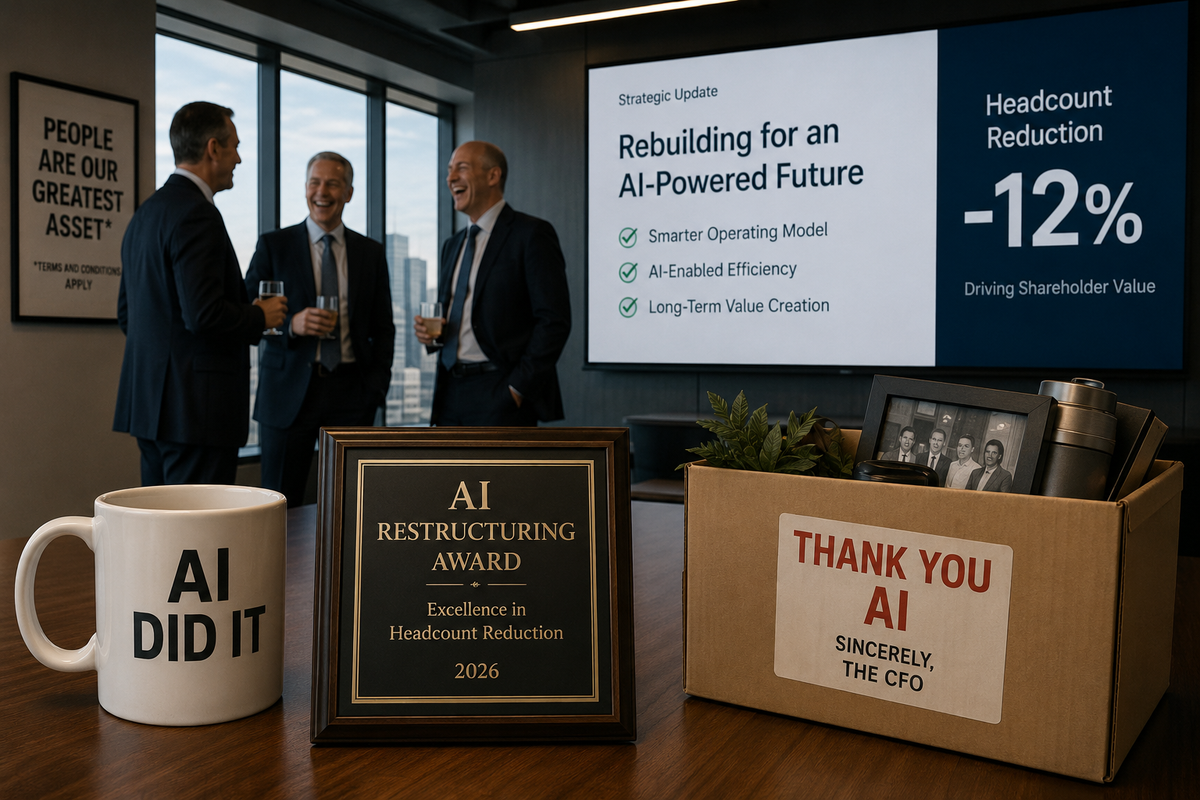
Fidelity is cutting roughly 800 to 1,000 jobs while hiring thousands more, including early career engineers. The official line is a new technology and product delivery model. Fidelity has said AI was not the reason. Naturally, everyone immediately turned it into an AI story anyway.
That is the point.
AI has become the corporate fog machine for decisions companies were probably going to make regardless.
Flatten management layers.
Move work to cheaper talent.
Pause hiring in bloated functions.
Reduce service cost.
Close underused offices.
Consolidate teams.
Cut roles that somehow survived the last three rounds of “transformation.”
None of this is new. It just sounds better when you put “AI enabled operating model” on the slide and let everyone pretend the spreadsheet has become sentient.
Across portfolio companies, public companies and large corporates, the language is becoming painfully familiar. Nobody is cutting headcount anymore. They are “reallocating resources toward AI capability.” Nobody is reducing management bloat. They are “building a more agile, AI ready organization.” Nobody is doing ordinary cost discipline. They are “capturing the AI productivity dividend.”
Lovely phrase.
The dividend is usually paid by the people who used to do the work.
AI is real. In some businesses, it is already taking serious cost out. Customer service, sales support, coding, content ops, finance workflows, legal review, scheduling, reporting, analytics. There are real examples where companies are removing 20 to 30 percent of cost and improving the customer experience at the same time.
That deserves credit.
But the gap between the AI press release and the AI operating outcome is now wide enough to fly a reasonably priced private jet through.
Most AI restructuring over the next four quarters will not be AI restructuring. It will be normal cost cutting with better branding.
The CFO did the firing.
AI took the credit.
The board nodded approvingly.
Most companies will not have an AI advantage by 2027.
They will just have fewer people and a much better paragraph in the investor update.


