
The most creative people in private equity are not operators.

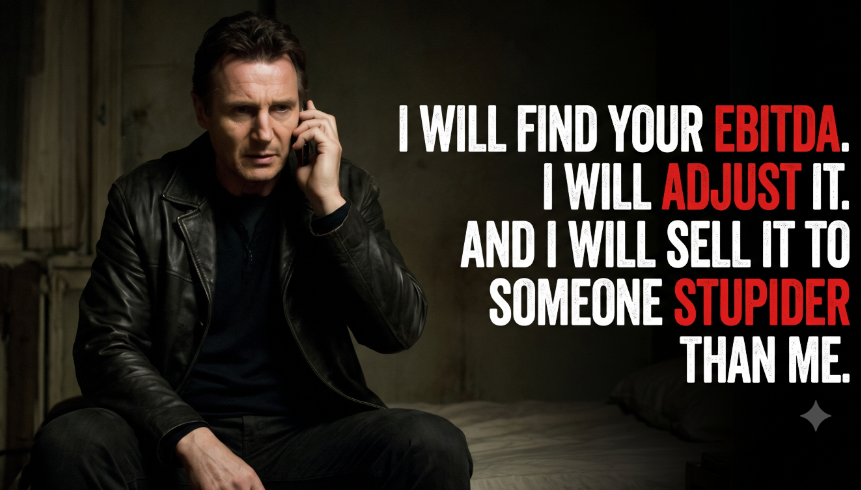
They are the people who calculate adjusted EBITDA.
Some of them could make a corpse look cash generative by calling the smell “temporary integration friction.”
We have somehow built an industry where the most important number in the deal is also the one most aggressively fictionalised.
Revenue “normalisations.”
Synergy add-backs.
Owner expenses.
One-time costs that appear with the reliability of a British train strike.
Run-rate savings from initiatives nobody has started yet.
S&P found EBITDA add-backs for 2021 deals were over 32% of management-projected EBITDA. More recent data still has add-backs around 26% of management-adjusted EBITDA for 2023 and 2024.
Which is encouraging, in the same way finding only one rat in your kitchen is encouraging.
The problem is not adjusted EBITDA.
The problem is pretending adjusted EBITDA is cash flow with a better haircut.
When money was free, everyone played along. Buyers accepted heroic adjustments because debt was cheap, exits were easy, and the next buyer was assumed to be even more enthusiastic.
Now capital has a cost again, hold periods are longer, and the next buyer has started reading footnotes.
Terribly inconsiderate.
This is where proper value creation actually matters.
Turning adjusted EBITDA into real EBITDA.
Turning real EBITDA into cash.
Turning cash into debt paydown, reinvestment, and exit quality.
Awful work, obviously.
Much easier to rename the add-back.