The biggest LPs in private equity now hold close to $1 trillion in PE assets.

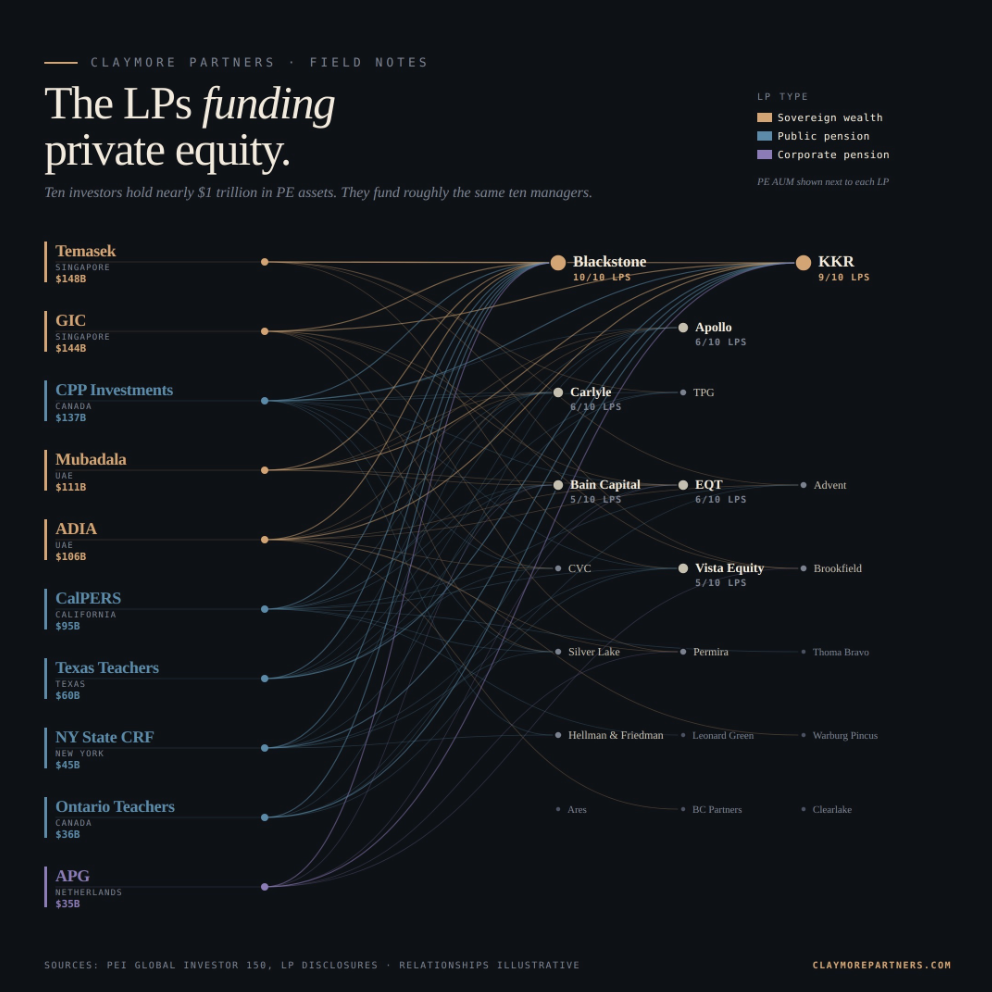
And somehow, magnificently, they all seem to have discovered the same ten managers.
Every one of the top 10 backs Blackstone. Nine of ten back KKR. Apollo, Carlyle and EQT show up across more than half the list.
This is not stupidity. It is institutional logic.
When you are CalPERS, ADIA, GIC or Temasek, and you need to write $500m cheques without accidentally becoming the investment committee’s next crime scene, the list of managers who can absorb the capital is not very long.
So the same names keep winning.
Not always because they have the best strategy. Often because they have the largest machine, the safest brand, the deepest reporting package, the cleanest institutional plumbing and the lowest career risk for everyone involved.
That last bit matters more than people admit.
Nobody gets fired for allocating to Blackstone. Plenty of people get remembered for backing the clever emerging manager who turned out to be a PowerPoint with a Patagonia vest.
This is the great irony of private equity.
The “alternatives” industry is now funded by an incredibly un-alternative group of LPs, writing increasingly large cheques to an increasingly concentrated group of managers, who then explain diversification in 40-slide annual meeting decks.
The asset class started as a way to access differentiated ownership, differentiated information and differentiated returns.
At the top end, it now looks a lot more like an index with better tailoring and worse liquidity.
That does not make the mega-firms bad businesses. Quite the opposite. It makes them terrifyingly good businesses.
But it does make the word “alternative” do a lot of unpaid labour.