
views
views

views
views
views

views

views
Private equity keeps hiring “value creation” people, then sends them into portfolio companies with zero mandate, zero budget, and the authority level of a polite email. And then everyone acts confused when the plan doesn’t happen. Obvious value creation: We underwrote 300 bps of margin expansion from “procurement synergies.
views
That’s the whole game. You ask for growth. They pick the metric that moves fastest and connects to cash slowest. Suddenly the weekly update is a victory lap because CTR is up. Or CPM is down. Or “engagement” is strong. Or leads are “cheaper”. None of which tells you

views
They fail because integration was treated as a future problem. The pitch always sounds the same. Buy fragmented assets. Centralise back office. Unlock synergies. Scale. What gets skipped is the hard part. How these businesses actually work once they’re stitched together. Different pricing logic. Different sales behaviours. Different tech
views
Translation for anyone still clinging to 2016: the deal doesn’t work unless you actually run the business. Awful, I know. A decade ago, a “typical” buyout could hit a 2.5x over five years with ~5% annual EBITDA growth because leverage was fat and multiple expansion did the heavy
views
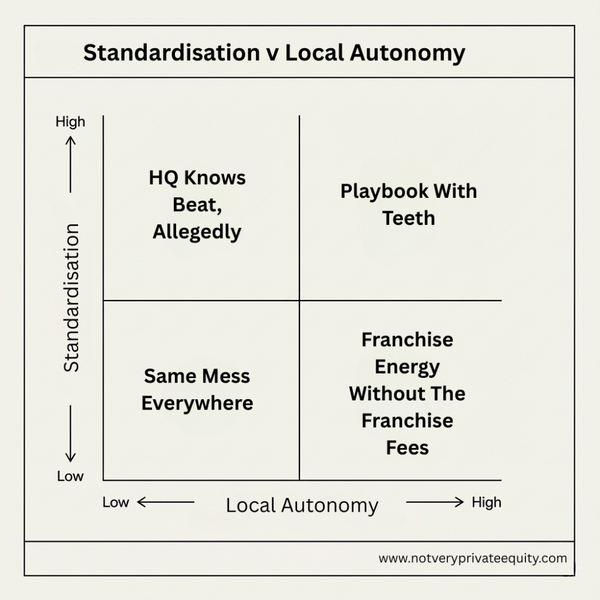
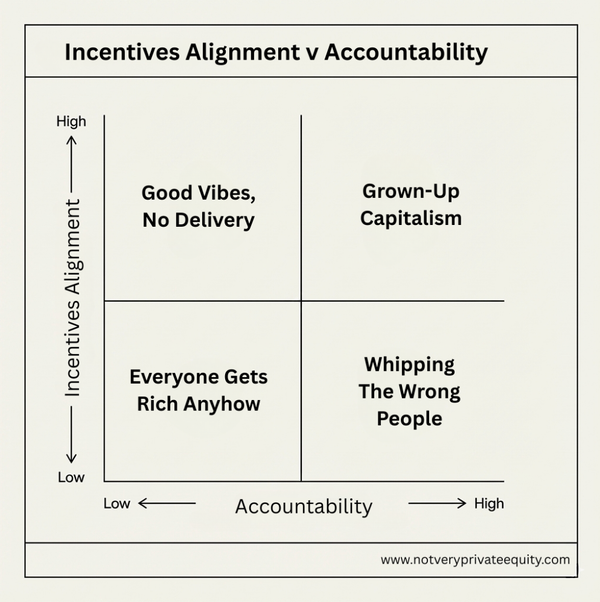
It’s what people say when they haven’t done the hard part, which is deciding who actually owns the outcome, what “good” looks like, and what happens when it doesn’t show up. This is the incentives problem in four squares. Top right is grown up capitalism. Clear targets.

views
I asked a model to launch a $2B services roll up. It named the fund, designed the logo, scraped every founder over 55 within a 50 mile radius of a metro with above average household income, and ranked them by “succession anxiety score.” It built the investment committee memo before
views
You see this constantly in home services and other PE-backed, multi-location businesses. New locations are added faster than systems mature. Marketing budgets increase, but lead quality becomes harder to explain. Revenue targets go up, while visibility into what’s actually driving demand goes down. On paper, the business is scaling.