Most PE returns were the tide going out. Now you get to find out who can swim.
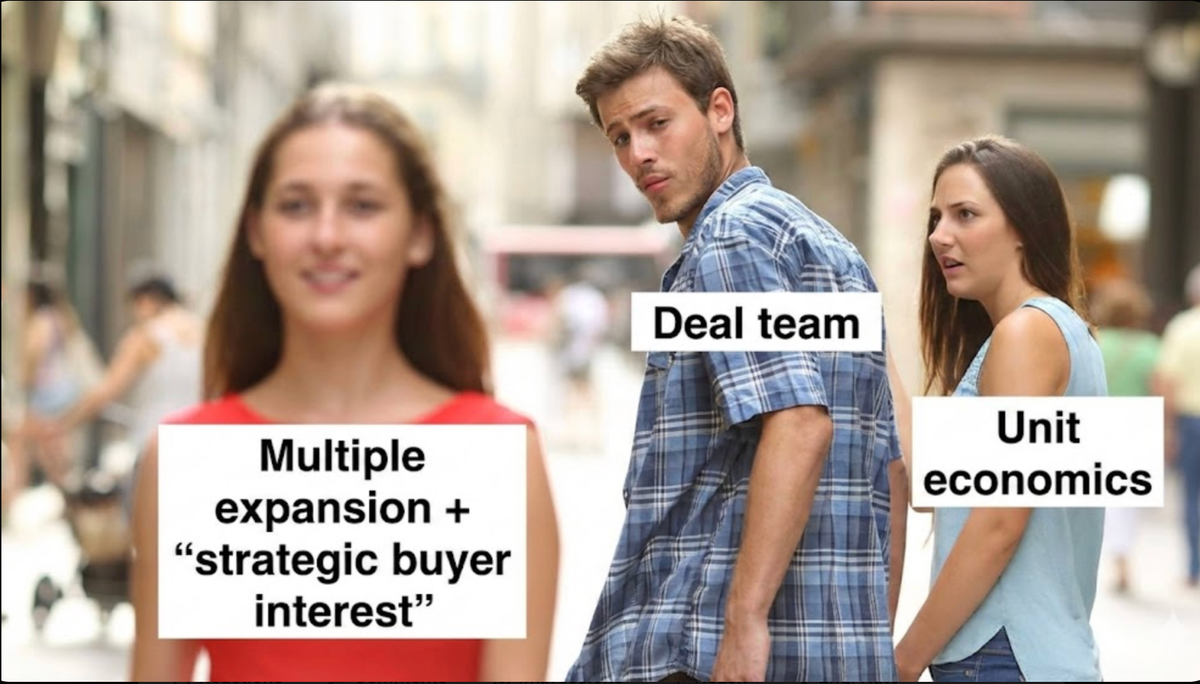
Every deal team has the same comfort blanket in the IC deck: multiple expansion plus strategic buyer interest, because nothing says “value creation” like hoping the market gets horny again.
Apollo put numbers on it in their Market Insight, Private Equity Returns to Its Roots (Jan 29, 2026): from 2010 to 2021, roughly 66% of value creation came from leverage and multiple expansion, stuff largely outside the manager’s control.
That party trick worked when money was cheap and everyone pretended a WACC was a vibe. Now exits are tighter, financing costs are real, and buyers want proof not poetry.
Meanwhile, the thing you can actually control, unit economics, gets sat in the corner like a red-headed stepchild.
Whether it’s SaaS, retail, logistics, healthcare, manufacturing, whatever, it’s the same boring mechanics that decide outcomes: acquisition cost versus payback, gross margin after the real cost to serve, churn and returns, utilisation and throughput, credit losses, fulfilment leakage, support load, discounting creep, all the unsexy maths that decides if growth is profitable or just noisy.
You don’t earn a premium multiple by workshoping “strategic options”. You earn it by building a business that doesn’t leak cash between demand and delivery, week after week, with owners, metrics, and consequences.