Every board deck says “pricing power” like it’s a personality trait.
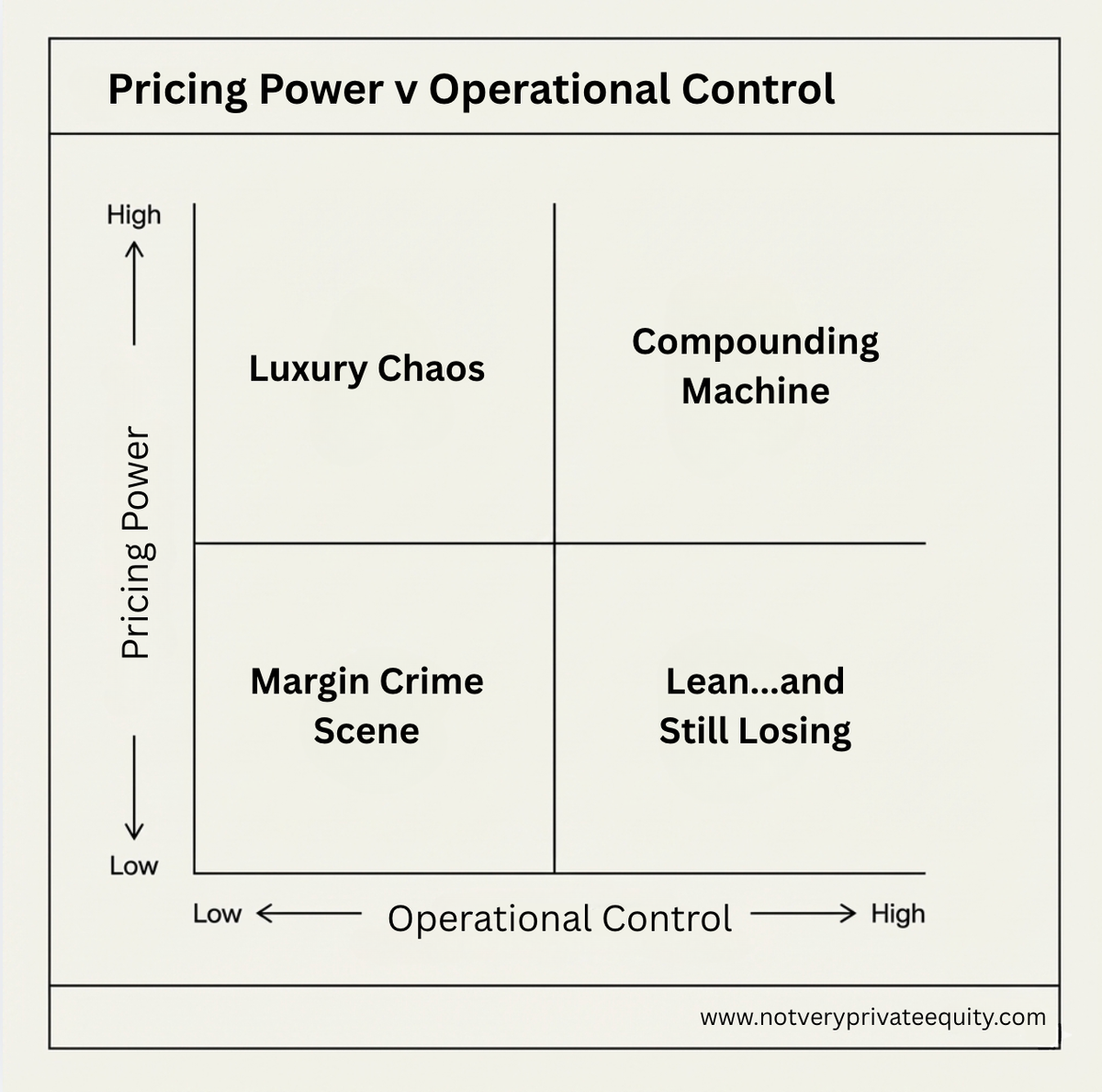
Most businesses don’t have pricing power. They have a CFO with a spreadsheet, a CMO with a hope, and a sales team quietly discounting in the background.
This is the bit everyone skips: pricing power is only half the game. The other half is operational control. And PE loves confusing activity with control.
Top right is the only place compounding happens. You can charge a premium and you can deliver it repeatedly without heroic effort. You know your unit economics by channel. You know where margin leaks. You can scale without the business turning into a WhatsApp group.
Top left is where “premium brand” becomes an excuse for chaos. You can raise prices because you’ve got a story, a logo, or a captive customer. But ops are held together with vibes, and every incremental dollar of revenue drags three dollars of complexity behind it. The brand is doing cardio while the business smokes.
Bottom right is my favourite tragedy. The Lean posters go up. The consultants get paid. The cost base comes down. And the business still loses because it’s selling an undifferentiated product to an undifferentiated customer with an undifferentiated route to market. Congratulations on becoming efficient at a bad business.
Bottom left is where margins go to die. No pricing power. No control. Just volume chasing, discounting, and “we’ll make it up on add ons” said by people who never do.
Most value creation plans start in the wrong quadrant. They start with cost because it’s measurable. They should start with operational control because it creates the right to raise price without getting killed on churn, complaints, and callbacks.
Price is a strategy only when ops can keep up.